
Transcatheter Aortic Valve Implantation (TAVI)
TAVI treats severe aortic stenosis without open-heart surgery. A bioprosthetic valve is delivered by catheter — usually through an artery in the leg — and takes over from the diseased valve.
How it works
Sedation: Most patients are treated with a light sedation, “twilight”
Access: Usually via the femoral artery in the groin; alternative access routes are used if needed.
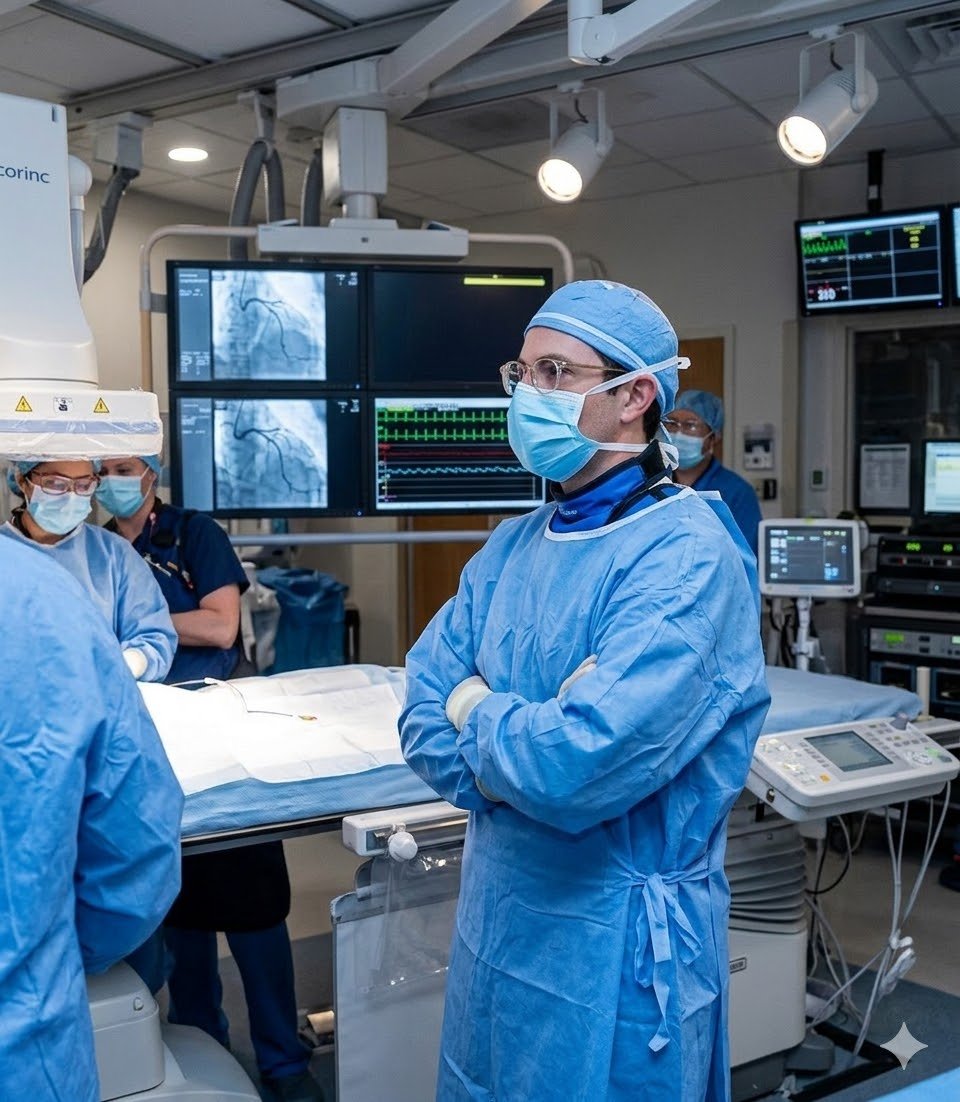
Delivery and deployment: A catheter guides the valve into place under imaging guidance, where it is expanded inside the diseased valve — restoring blood flow immediately.
Benefits
Less invasive than open-heart surgery: shorter anaesthesia time, smaller or no chest incision.
Shorter hospital stay and faster recovery for many patients.
Effective symptom relief and improved quality of life.
Suitable for patients who are poor surgical candidates due to age or comorbidities.
Risks and complications
Bleeding or bruising at the groin access site
Injury to the artery used for access
Disturbance to the heart’s electrical conduction, which may require a permanent pacemaker
Stroke
Death
Every cardiac procedure carries risk. Your individual risk depends on your age, heart function, valve and vessel anatomy, and other medical conditions, and is assessed and discussed with you in detail before any decision is made.
After the procedure
Patients recover quickly, and are back on their feet within a few hours of the procedure.
Most patients stay in hospital for 1–2 days after an uncomplicated procedure, with monitoring of the access site and heart rhythm.
Follow-up includes clinical review and echocardiography at discharge, 1 month and 12 months.
Driving is restricted for 30 days post TAVI
GP role
Refer patients with symptoms of aortic stenosis (breathlessness, angina, syncope) or a murmur for echocardiography
Help optimise comorbidities before the procedure, and coordinate medication changes (e.g. antiplatelet/anticoagulant therapy) with the cardiology team peri-procedure.
Support post-procedure monitoring and timely follow-up, and stay alert to late complications such as arrhythmia or valve degeneration, which require lifelong surveillance.